

By Cathy M. Rosenthal
Follow these Thanksgiving safety tips to keep your pet safe this holiday.
Thanksgiving is a wonderful time to gather with family and friends, enjoy a delicious meal, and give thanks for the good things in our lives. For our pets, however, the holiday can be a little confusing.
Dogs may wonder why the house suddenly smells like heaven, and nobody is sharing. Cats may be annoyed that their favorite sleeping spot has been taken over by a visiting relative. And both may be wondering why so many people have invaded their otherwise peaceful home.
While we prepare the feast and entertain guests, our pets navigate a holiday filled with unfamiliar smells, tempting foods, and changes to their normal routines. A little planning can help keep everyone safe and comfortable.
What’s on the Menu? Not Everything is for Pets
Let’s start with the food. Thanksgiving dinner may be delicious for us, but some holiday favorites can cause serious health problems for dogs and cats.
- Turkey: Plain, fully cooked, boneless turkey is generally safe in small amounts. But skip the skin, gravy, fatty pieces, and heavily seasoned meat. Rich foods can cause digestive upset and, in some cases, pancreatitis.
- Cooked bones: Never give pets turkey bones. They can splinter, causing choking, intestinal blockages, or internal injuries. No matter how convincingly your dog stares at you, the answer should be no.
- Onions and garlic: Both are toxic to dogs and cats, whether raw, cooked, or powdered. That means stuffing, gravy, and casseroles may contain ingredients that aren’t safe for pets.
- Grapes and raisins: These can cause sudden kidney failure in dogs. Keep fruit salads, baked goods, and other dishes containing them out of reach.
- Chocolate: Chocolate is toxic to dogs and cats, with dark chocolate and baking chocolate posing especially serious risks.
- Pies and desserts: Rich, sugary desserts can upset pets’ stomachs. Sugar-free treats containing xylitol, sometimes called birch sugar, can be life-threatening to dogs.
- Raw bread dough: Yeast dough can expand in a pet’s stomach and produce alcohol as it ferments, creating a potentially life-threatening emergency.
- Alcohol: Never share wine, cocktails, or alcoholic desserts with pets. Even small amounts can cause serious poisoning.
- Trash and leftovers: Turkey carcasses, bones, foil, and food scraps can be irresistible to curious pets. Secure garbage cans and put leftovers away promptly.
If you want to include your pets in the holiday meal, offer a small amount of plain turkey, unseasoned green beans, or plain pumpkin purée (not pumpkin pie filling). Just remember that treats should be modest, especially for pets with sensitive stomachs or special diets.
Beware of the Well-Meaning Guest
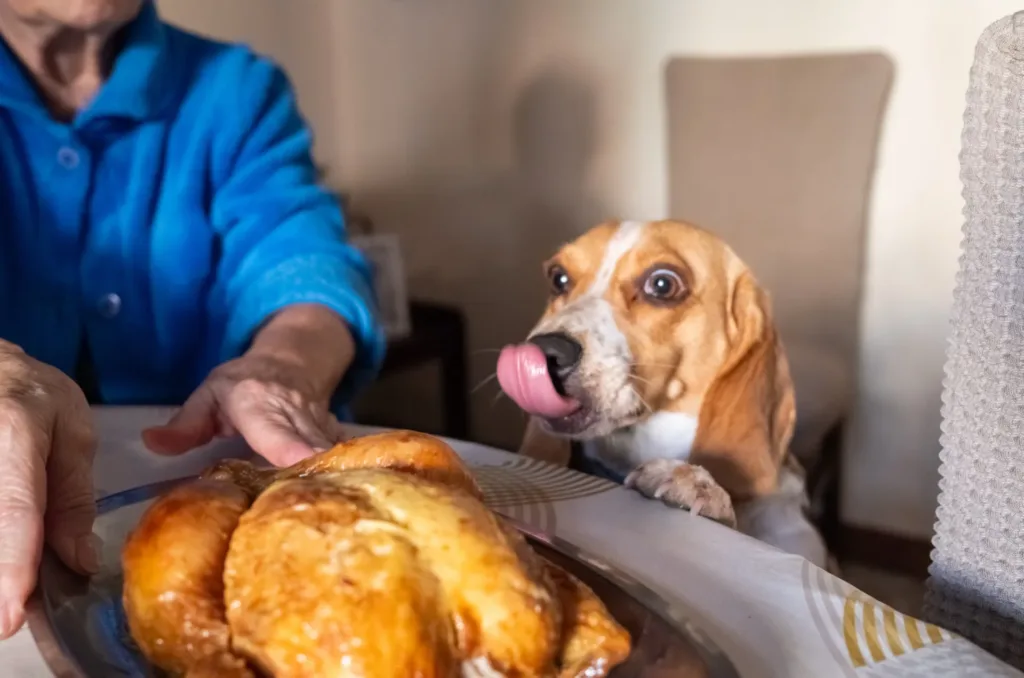
Every Thanksgiving gathering seems to have at least one guest who believes the family dog looks hungry. You know the person. They slip a little turkey under the table, offer a bite of stuffing, or insist that one tiny piece of pie couldn’t possibly hurt. Meanwhile, your dog has identified this person as the most generous human in the room and has decided to remain permanently stationed beside their chair.
Before guests arrive, let everyone know your pets shouldn’t be fed from the table. Explain that some foods can make animals seriously ill and that even safe foods can cause problems when several people each offer just a little.
You might even put a small bowl of pet-safe treats on the counter and tell guests that these are the only approved snacks. Better yet, ask them to let you handle the treats.
And remember, cats can be just as opportunistic as dogs. A curious cat may jump onto the counter to investigate the turkey or sample something left unattended. Keep food covered and supervise pets around the kitchen.
Give Your Pets a Break from the Festivities
Thanksgiving isn’t just about food. It’s also about noise, visitors, and changes in routine, which can be stressful for some pets.
Dogs who normally enjoy a quiet home may become overwhelmed by unfamiliar people, excited children, and constant activity. Even friendly dogs can reach a point where they’ve had enough attention.
Give your dog a quiet place to retreat to, with a comfortable bed, water, and a favorite toy or chew. If your dog becomes anxious or overly excited around visitors, consider letting them relax in a separate room before guests arrive.
Cats may need even more consideration. Most cats are creatures of habit, and a house full of guests can disrupt their sense of security. Some will disappear under the bed the moment the doorbell rings. Others may investigate the visitors, only to become overwhelmed when everyone wants to pet them.
For cats who are shy, easily frightened, or unfamiliar with visitors, setting up a quiet room before the festivities begin may be the kindest option. Provide food, water, a litter box, comfortable bedding, and a hiding place. Close the door and let guests know the room is off-limits. A familiar blanket or favorite perch can make the space more inviting.
Don’t feel guilty about keeping your cat away from the party. While we may think our pets should participate in every family celebration, some would much rather spend Thanksgiving napping in peace.
And frankly, after a few hours of holiday conversation, some of us might appreciate a quiet room ourselves.
Watch Those Doors
With guests coming and going, you may open exterior doors more often than usual. That creates opportunities for pets to slip outside unnoticed.
A dog who normally stays close to home may bolt when startled by a visitor. An indoor cat may dart through an open door while someone is carrying in a casserole.
Make sure your pets are wearing identification and that their microchip information is current. If you expect lots of arrivals and departures, keep pets secured in another room until everyone has settled in.
Remind guests, especially children, to watch the doors. It’s much easier to prevent an escape than to spend Thanksgiving afternoon searching the neighborhood for a frightened pet.
Keep an Eye on the Kids, Too
Children and pets can be wonderful companions, but holiday gatherings aren’t always the best time for unsupervised interactions.
Young children may want to hug, chase, or pick up pets who aren’t comfortable with that attention. Even a normally patient dog or cat may react defensively if frightened or overwhelmed.
Teach children to let pets approach them rather than following them around. Never allow children to disturb animals while they’re eating, sleeping, or resting in their safe spaces.
Remember that supervision means an adult is actively watching the interaction, not simply being in the same room.
A Happy Thanksgiving for Everyone
The holidays should be enjoyable for the whole family, including the four-legged members. That doesn’t mean your pets need a seat at the table or a helping of everything on your plate.
They just need a little consideration, a safe environment, and the comfort of knowing their normal routines haven’t disappeared completely.
So enjoy your Thanksgiving feast, welcome your guests, and give your pets a little extra attention when the excitement settles down.
And if your dog spends the entire meal staring lovingly at Aunt Martha, don’t be fooled. He may adore her, but there’s also a good chance he’s noticed she’s the one most likely to drop a piece of turkey.
If your pet eats something potentially toxic, contact your veterinarian or an emergency veterinary clinic immediately. You can also call the ASPCA Animal Poison Control Center at 888-426-4435 (consultation fees may apply).
Happy Thanksgiving!