

By Cathy M. Rosenthal
I first met Nicholas Gilman in the mid-1990s when we were both working at American Humane. Nick had recently joined the organization, and one of his first assignments was to do some media. At the time, I handled media relations, and I had gotten us booked on CBS This Morning to talk about pets.
The day before the segment, Nick and I drove around New York City collecting the animals we would bring onto the set. Somewhere along the way, I made the mistake of mentioning that I was afraid of snakes as a result of getting into a sleeping bag with one as child.
Naturally, Nick decided we needed a snake.
The plan was for me to stay off camera, manage the animals, and hand them to Nick as he talked with the hosts. Which meant that before Nick could hold a snake on national television, I had to calmly hand it to him.
That was my introduction to Nick Gilman.
Over the years, plenty of other memorable moments followed.
For more than a decade, I wrote the opening sessions for American Humane’s annual national conferences—everything from speaker remarks to elaborate skits. One year, we did a Star Trek spoof with Nick playing Captain James T. Kirk. I made about 40 Tribbles for the set. (If you don’t know what Tribbles are, look them up. Let’s just say they could have benefited from a good spay/neuter program.)
At one point, we attempted to beam the Tribbles off the ship but accidentally beamed away our “communicators” instead, which, in our decidedly pre-smartphone world, were phone cards taped beneath the seats of all 600 attendees. (I never walked four feet through the snow to get to school, but I did live through the era of paying by the minute for long-distance calls.)
The script called for Captain Kirk to react to that accidental transporter issue. We had rehearsed the scene, and Nick knew what he was supposed to say. But when the moment came, he abandoned the script and supplied a line of his own.
The communicator malfunction was blamed on “those HSUS bastards!”
The room erupted in laughter.
I was playing “Mr. Sock” at the time, and while I can’t remember exactly what I did, I’m fairly certain my puppet hand expressed some version of, “Oh dear gawd. What just happened?”
The representatives from the Humane Society of the United States were understandably less amused than the attendees. Afterward, they wanted to see the script to determine whether that had, in fact, been the dialogue American Humane had written for its national conference.
It had not.
They were reassured that this was simply “Nick being Nick.” Everyone eventually had a good laugh, and we moved on because anyone who knows Nick knows exactly what “Nick being Nick” means.
(I was talking with Jim Tedford recently, president of the Association of Animal Welfare Administrators, and he says he was there and still remembers that Star Trek skit. Some conference moments apparently have a longer shelf life than others.)
I tell you all this because Nick has always been a big personality. He fills a room – with his presence, certainly, but also with that unmistakable voice. Ask him how he’s doing and you can almost hear the answer before he gives it: “NEVER BETTER!”
That is why people who know Nick only from across a conference room or from one of the hundreds of workshops he’s presented might be surprised by something else about him.
Nick Gilman is remarkably humble.
For those of you who know Nick, I’ll give you a moment to recover from your spit take. But yes, I am, in fact, talking about the same Nick Gilman.
Here’s why.
Owning Your Mistakes
In his essay for Humane Perspectives, Leadership in Animal Welfare, “Management Malfunctions: A Guide to Recognizing and Owning Your Mistakes,” Nick writes about leadership mistakes. Not other people’s mistakes; his own. After more than four decades in animal welfare, much of it in management and leadership, he doesn’t begin by telling us what he got right. He starts by acknowledging how much he got wrong. His argument is simple: making mistakes isn’t a failure. Failing to recognize and learn from them is.
He writes as if he’s having a direct conversation with future leaders in our field. Rather than simply telling them what he has learned, he anticipates the questions they might ask, then answers them. What if I don’t make many mistakes? What do I do once I realize I’ve made one? Should my staff adapt to me because I’m the leader? Again and again, Nick seems to know what the next question will be, perhaps because after four decades, he’s asked many of those same questions himself.
That willingness to examine his own decisions runs throughout his essay. When something goes wrong, Nick asks what percentage of the problem belongs to him. Even if it’s only five percent, he says that had he handled his part differently, the problem might never have happened.
That’s a striking philosophy from someone who’s spent a career as the person in charge. But that’s exactly the point.
Nick’s career has taken him from direct animal care to executive leadership, national disaster relief, cruelty investigations, consulting, and shelter design. He has worked for the Humane Society of the United States and American Humane, and has served as executive director of a few animal shelters along the way. He has taught hundreds of workshops across the United States and internationally and was a founding board member of the National Federation of Humane Societies.
Yet one of the most interesting lessons in his essay is that leadership isn’t about proving how good a leader you are.
It’s about creating the conditions for other people to succeed.
Nick rejects the Hollywood version of the leader, the square-jawed commander who expects everyone else to adapt and follow. Instead, he argues that leaders must understand what motivates individual team members and be willing to adjust their leadership style accordingly.
He is equally candid about his own shortcomings. His memory isn’t what he would like it to be, he says, so he surrounds himself with people who have great memories. He isn’t naturally detail-oriented, so he works with people who are. Rather than hiding weaknesses, he sees understanding them as part of building a stronger team.
More Than a Big Personality
There is something wonderfully Nick about all of this.
The man who can command a ballroom, improvise a line that sends representatives from another national organization scrambling for the script, and answer “Never better!” loudly enough that you believe him, is also telling the next generation of animal welfare leaders: Know what you’re not good at. Own your mistakes. Apologize when you should. Surround yourself with people who make you better. And don’t confuse being in charge with always being right.
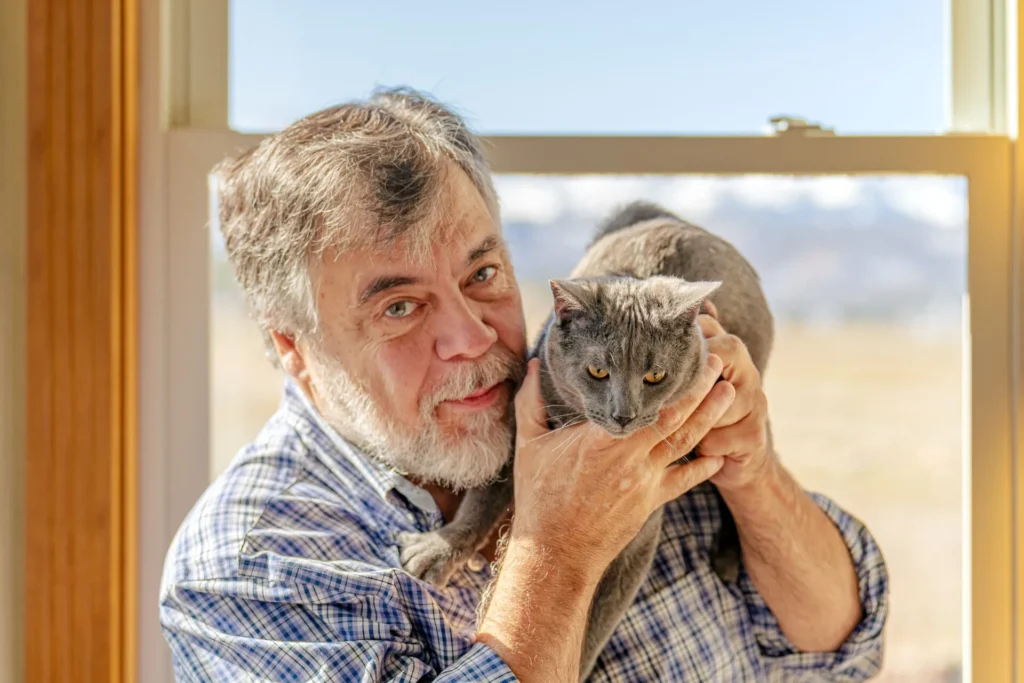
Today, Nick serves as executive director of Second Chance Humane Society in Colorado, still doing the work more than four decades after he began.
I’ve known him for much of that journey.
And when I think back to that younger Nick Gilman preparing to go on national television or performing in a skit as Captain Kirk — and going spectacularly off script in front of a ballroom full of animal welfare professionals — I realize the big personality was always the easiest part of Nick to notice.
It just wasn’t necessarily the most important part.
Perhaps that’s the perspective that comes after four decades of leadership. You don’t have to make yourself smaller to be humble. You just have to be willing to admit when you’re wrong.