



By Cathy M. Rosenthal
When most people think of the 4th of July, they picture backyard barbecues, family gatherings, and fireworks lighting up the night sky. But if you’re the owner of a noise-phobic pet, like I was, you probably picture something else entirely: trembling, panting, pacing, and wide-eyed panic.
I’ve shared my life with two dogs who were absolutely terrified of loud noises. Rocky and Maggie didn’t just startle at fireworks — one loud pop could send them spiraling into a full-blown panic that lasted for hours. And once the fear cycle started, it was nearly impossible to calm them down.
Noise-phobia is more than just nervousness. For many dogs, it’s sheer terror. Symptoms can include panting, pacing, trembling, hiding, freezing in place, or worse — trying to escape entirely. Some dogs will claw at doors or even crash through windows in a desperate attempt to get away from the sounds they think are closing in on them. It’s heartbreaking to watch and can be dangerous for both the dog and your home.
After years of trial and error, I learned that there’s no one-size-fits-all solution. In fact, helping Maggie and Rocky required layering multiple strategies depending on the severity of the situation. On quieter nights, I might slip on Maggie’s anxiety garments, add a few drops of Rescue Remedy® (homeopathic stress relief) to her water, and turn on some calming classical music — often Through a Dog’s Ear, which was designed specifically to soothe anxious dogs. I even added lavender oil to a diffuser to help create a more relaxing environment.
But when the big fireworks shows started, I had to bring out the full toolkit. Maggie received a prescription for anxiety from our vet, which helped her relax enough to keep her safe. I wrapped her in not one but two anxiety garments, turned up the volume on an action movie to drown out the booms, and sometimes we retreated to my walk-in closet, where the hanging clothes helped muffle the sound even more. Even with all that, she still trembled—but it was far better than the level of panic she used to experience.
If your dog struggles with noise anxiety, don’t wait until the first fireworks start to figure out a plan. The earlier you prepare, the better your chances of helping your dog cope. Start by talking with your veterinarian. Medication isn’t always necessary, but in severe cases, it can be an important part of keeping your dog safe and calm during the peak of the noise.
Help your dog get comfortable with any tools you plan to use, whether it’s anxiety garments, white noise machines, or calming music, by practicing with them during quiet, uneventful times. The goal is to build positive associations long before the first firecracker pops. And yes, plan to be home with your noisephobic pet during fireworks and thunderstorms. Even if you can’t take the fear away entirely, your calm presence can be reassuring.
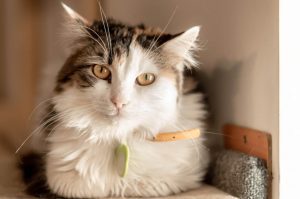
And while dogs often wear their fear more visibly, cats feel the stress too; they’re just better at hiding it. A frightened cat may simply vanish under the bed or behind the couch for hours. Before the noise starts, create a quiet space away from windows with cozy hiding spots, white noise, or calming music to help them feel safe. A closed cardboard box with a hole cut into it for entry, lined with blankets, can sometimes feel like the safest spot in the world to a frightened cat. (Put that box in a clothes closet for even more soundproofing.)
Finally, don’t forget one of the most important safety steps: make sure your pets are wearing up-to-date ID tags and that their microchip information is current. Frightened pets can bolt through doors, gates, or even windows, and sadly, shelters always see an increase in lost animals after holidays like the 4th of July.
Keep your pets safe.