



By Cathy M. Rosenthal
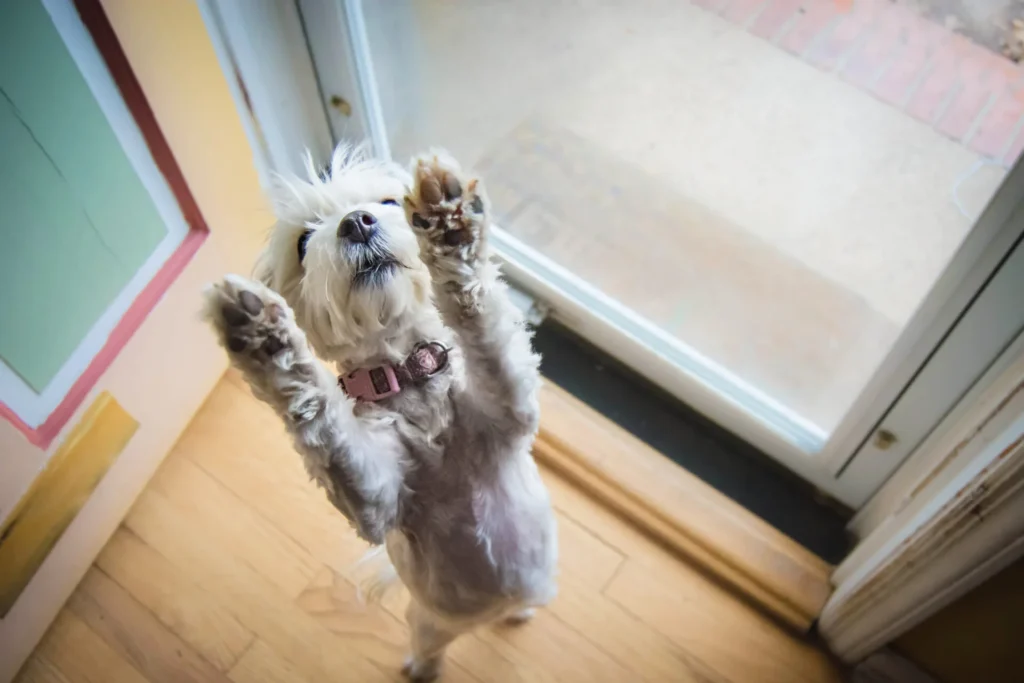
When the doorbell rings, most dogs think it’s party time. The rush to the door, the jumping, the wagging — for them, it’s the best part of the day. But for us (and our guests), it can be a bit overwhelming — especially if your dog is 80 pounds of pure excitement.
Teaching front door manners isn’t about squashing your dog’s enthusiasm. It’s about channeling that energy into behavior that keeps everyone safe and makes visitors feel welcome. Here’s a step-by-step approach that can turn that chaotic greeting into a calm, tail-wagging welcome.
Step 1: Teach the Clicker
Before we tackle the door, teach your dog how to learn. Get a training clicker — a small device that makes a distinct clicking sound — and show your dog what it means. Say your dog’s name and wait for eye contact. The moment he looks at you, click and give him a treat. This marks the behavior you want. Repeat this 15 to 20 times per session, a couple of sessions a day, for several days. Soon, that click will become music to his ears — it means, “You did the right thing, and a reward is coming!”Once he understands the clicker, use it to reinforce basic commands like sit, stay, or down. These cues are the building blocks of polite front-door behavior.
Step 2: Practice Doorbell Drills
Now it’s time to put it all together. Enlist a helper who doesn’t mind ringing the doorbell a dozen times in a row. When the bell rings, your dog will run to the door — let him get that out of his system for a second. If you want to give him a way to “get the wiggles out,” you can teach a “jump” cue first, then pair it with “off” or “sit.” This allows him to express excitement but also learn when to stop. Once he sits, click and reward. Slowly open the door. If he pops back up, close the door and try again. Repeat until you can open the door with him sitting calmly.
Step 3: Train Your Guests, too
Even with the best training, dogs sometimes forget their manners when a new person enters the room. If he jumps, have your guest turn their back and say nothing. The moment his paws hit the ground — and they will, because backsides aren’t nearly as fun as faces — click, say “off,” and reward him. Your guest can then turn around and greet him. Repeat until your dog learns that sitting politely is the fastest way to get attention.
Step 4: Be Consistent
Training takes time, practice, and patience. Keep sessions short and positive — five to ten minutes at a time is plenty. Use a leash if you need more control, especially with large dogs who can knock guests over. Over time, your dog will learn that calm behavior opens doors — literally and figuratively — to the attention he craves.
Step 5: Reward Calm Behavior during Everyday Life
Training doesn’t end once your dog gets the hang of it — in fact, the real learning happens over time. Practice every day, even when no guests are expected. Ring your own doorbell, have family members come in and out, and reward him for sitting calmly each time. Also, look for “training moments” throughout the day. If your dog greets you calmly when you come home, praise and treat him right away. These everyday reinforcements will help your dog generalize the behavior and remember that keeping all four paws on the floor always pays off — not just when there’s a formal training session happening.
Good front door manners are a gift to you, your guests, and your dog. With a little practice and consistency, your dog can greet visitors with a wagging tail, four paws on the floor, and all the joy he feels — minus the flying leap.