


Chicken Wire and Calm Training: Solutions for Fence Fighting

Category:

As-Seen-With-Cathy-Rosenthal - 2

Encourage Kindness to Animals!

Highly-acclaimed children's books for your child or organization

Chicken Wire and Calm Training: Solutions for Fence Fighting

A little training can turn chaotic fence-line battles into calm, happy backyard time.

By Cathy M. Rosenthal

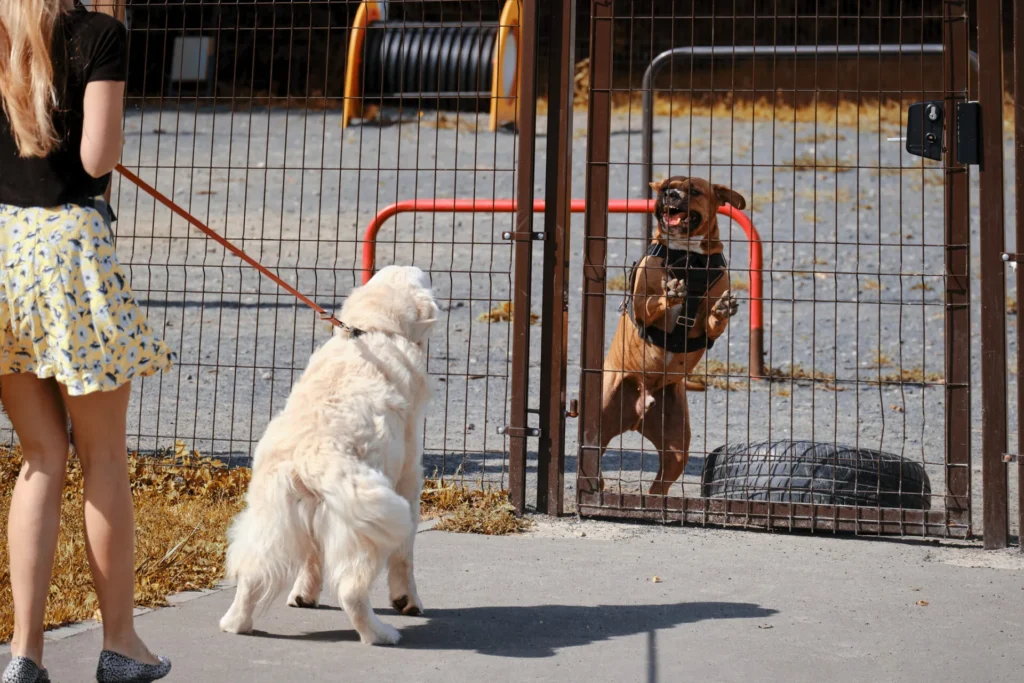
Few things can make neighbors more tense than a pair of dogs going nose-to-nose through the fence, barking and slamming into the boards until it sounds like the fence might come crashing down. This behavior — often referred to as fence fighting — is common but stressful, and if left unaddressed, it can damage your fence, frustrate your neighbors, and keep everyone, including the dogs, on edge.

Reinforce Your Fence
If you have a wooden fence, the first practical step is to reinforce it. Nails often work loose with the constant impact of dogs hitting the boards. Switching to wood screws will keep your fence more secure. If the boards are still popping loose, add an extra layer of security by attaching a two- to four-foot roll of chicken wire along the bottom half of the fence with a staple gun. If a board comes loose, the chicken wire will hold it in place and prevent dogs from squeezing through or escalating the fight. As a bonus, many dogs dislike the feel of wire on their claws and will avoid hitting the fence with as much force.

Teach New Habits
Of course, a stronger fence is just one part of the solution. To truly stop fence fighting, you have to teach your dog new habits. The behavior is self-rewarding — the barking, running, and back-and-forth chase release adrenaline and keep the dogs pumped up. Interrupting that cycle is key.

Supervise Your Dog in the Yard

Start by supervising your dog when they are in the yard. If you see them rushing toward the fence, call them back right away. If they respond, reward them with a treat or a favorite toy. If they don’t respond, calmly go get them and redirect them away from the fence, then reward them for settling down. The goal is to teach your dog that calm behavior earns your attention — not barking at the neighbor’s dog.

Create Structured Training Sessions

You can also create structured training sessions. Enlist a friend or neighbor to let their dog into the adjacent yard while you practice. As soon as your dog notices the other dog but before they bark, say their name, ask for a sit, and reward generously. If they begin to bark, guide them back from the fence, wait for quiet, then reward again. This takes practice and patience, but over time, your dog will learn that being calm near the fence gets them what they want most — praise and treats from you.

Reduce Visual Triggers

Another helpful step is to reduce visual triggers. If you have a see-through fence, consider adding privacy slats, bamboo rolls, or even landscaping like shrubs to break up the line of sight. Reducing the visual cue often lowers the intensity of the barking.

Give Your Dog Plenty of Exercise

And don’t forget about exercise. A well-exercised dog is less likely to spend their energy patrolling the fence line. Take daily walks, play games like hide-and-seek or “find it” in the yard, and use puzzle feeders to keep their mind engaged. Mental stimulation is just as important as physical exercise and can make a big difference in curbing unwanted behaviors.

Fence fighting can be stressful for you, your neighbors, and your dog, but with a combination of practical reinforcement, training, and consistency, you can bring peace back to your backyard. Your dog will be calmer, your fence will last longer, and your neighbors will thank you.

Please follow and like us:
Pin Share

Nonprofit 501(c) Organizations Copy Usage Notice
Nonprofit 501(c) organizations ONLY are welcome to use these posts on their websites free of charge. Please credit the original article by including the following attribution and with a link to the original article.

For Example:
This article originally appeared on CathyRosenthal.com | Chicken Wire and Calm Training: Solutions for Fence Fighting

Thank you for helping us spread the message of compassionate care and responsible pet ownership!

Leave a Comment

Your email address will not be published. Required fields are marked *

Why Humane Perspectives Isn’t Just for Animal Welfare Leaders

This weekend, my mom gave me the most honest feedback I could have asked for. She had just received her […]

Changing the Conversation About Pit Bull-Type Dogs: Lessons Learned from Ledy VanKavage

By Cathy M. Rosenthal Some people advocate quietly. Others walk into a room and make you believe change is possible. […]

The Stories I Haven’t Had Time to Write Yet

Somewhere between airports, conference rooms, humane education programs, grant workshops, book deadlines, and far too many cups of tea, I […]
DSC_4602

Cathy Rosenthal (aka The Pet Pundit), CHES, CFE

Animal Welfare Communications Strategist, Writer & Educator

Cathy M. Rosenthal is an award-winning humane educator and author, animal welfare strategist, pet columnist, and speaker who has spent more than 38 years working in animal welfare with local and national humane organizations. She helps people better understand and care for animals through her nationally syndicated My Pet World column and has been the longtime pet columnist for the San Antonio Express-News since 2003.

In addition to her writing, Cathy develops humane education, leadership, customer service, and compassion fatigue training programs for animal welfare organizations nationwide, and has helped raise millions of dollars through grant writing, strategic communications, and program development.

Cathy is the editor and curator of Humane Perspectives: Leadership in Animal Welfare and is the author of several books, including Grant Writing Boot Camp for Animal Advocates, The Lucky Tale of Two Dogs, and The Happy Tale of Two Cats, which was the 2026 winner of the Association of Professional Humane Educators’ (APHE) "Educator’s Choice Award" for Best Humane Education Book for Young Children. She also received the 2026 APHE Nathania Gartman Heroes Award for Impact in Humane Education. Her humane education programs in Texas have reached more than 45,000 elementary school children since 2019.

She resides in Texas with her husband, their cat Sterling, and a former community cat, Maddie, who successfully negotiated an indoor living arrangement but still considers human affection highly negotiable.

Humane Perspectives: Leadership in Animal Welfare is on Sale Now! Special website-only price for a limited time! Order your copy today.

Scroll to Top
0