


by Cathy M. Rosenthal
Dogs are wonderful companions. They are loyal, affectionate, intuitive, and often able to know exactly when we need a little extra love.
They also have absolutely no interest in preserving our dignity.
Invite someone important into your home, and your dog may immediately bury his nose in the guest’s crotch. Gather the family for Thanksgiving, and this may be the moment he decides to enthusiastically hump someone’s leg. Buy a beautiful new area rug, and sooner or later, your dog may sit down, lift his back feet, and drag his rear end across it.
Naturally, he will do this while you’re explaining how much the rug cost.
But as embarrassing as some canine behaviors may be to us, dogs aren’t trying to embarrass anyone. Most of these behaviors have perfectly reasonable explanations, at least from a dog’s point of view.
Take butt-scooting.
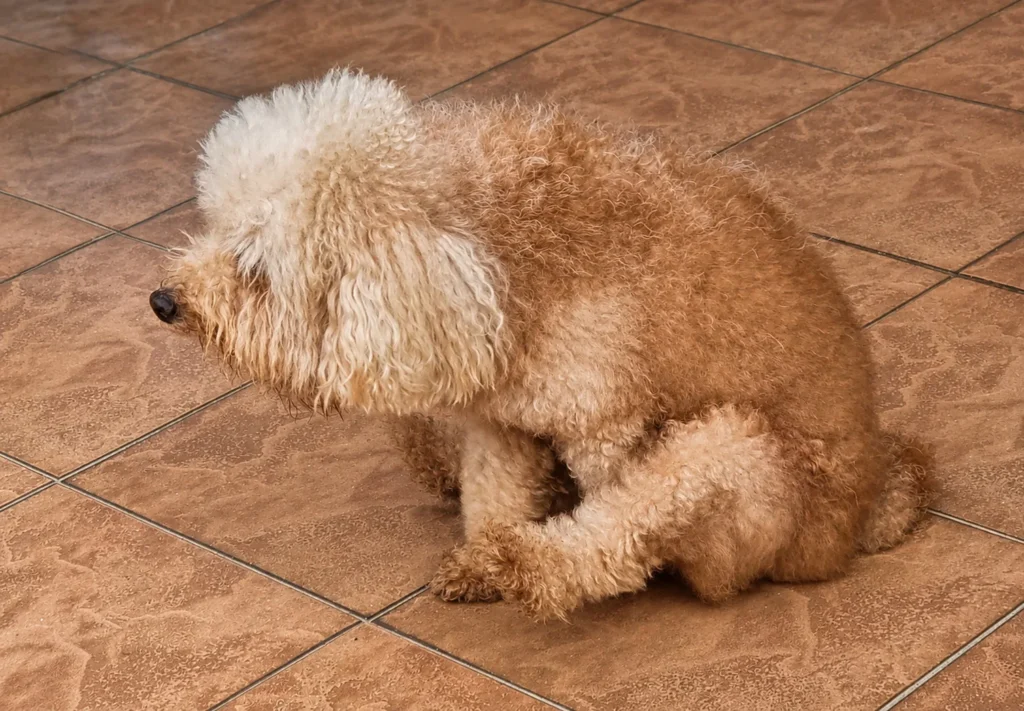
When a dog drags his rear end across the carpet or grass, something is usually bothering him back there. One of the most common causes is impacted anal glands, two small sacs located on either side of the anus. Normally, they empty naturally when a dog defecates, but sometimes they become full or impacted, creating pressure and discomfort.
Your dog has no idea this is socially unacceptable behavior. He just knows his backside itches and your carpet feels pretty darn good.
My butt itches.
The carpet scratches it.
I have solved the problem.
The fact that eight people are watching him over cocktails is irrelevant.
Scooting can also result from allergies, skin irritation, parasites, or other medical problems, so persistent scooting deserves a veterinary visit. And while some people learn to express their dog’s anal glands themselves, this is one area of pet care where many of us are perfectly happy to support the veterinary profession.
Then there’s humping.
Despite what people often assume, humping isn’t always sexual behavior, nor does it necessarily mean your dog is trying to “dominate” someone. Dogs may mount other dogs, people, toys, or pillows when they’re excited, overstimulated, anxious, or simply playing.
Unfortunately, dogs have never learned that Aunt Martha’s leg is not an appropriate outlet for their excitement. When this happens, Aunt Martha freezes. You freeze. And everyone else suddenly becomes deeply interested in the cheese tray.
The dog, meanwhile, appears to believe the evening is going extremely well.
Rather than yelling or punishing your dog, calmly interrupt the behavior and redirect him to something else. If your dog tends to hump when visitors arrive or during exciting situations, giving him a toy, chew, or another activity before he becomes overstimulated may help.
And what about the dreaded crotch sniff?
For dogs, sniffing is information gathering. Their sense of smell is vastly more powerful than ours, and areas of the human body containing more scent-producing glands naturally attract their attention.
Your dog isn’t being rude. He’s gathering information.
Interesting.
Very interesting.
The person takes a step backward.
The information is leaving.
The dog follows.
This is the point at which you begin wondering whether pretending not to know your own dog is still an option.
But you can work on teaching your dog an alternate greeting, such as sitting for attention, and reward him for keeping all four paws—and his nose—to himself.
Keep in mind, dogs also roll in foul-smelling substances, eat things we would rather not identify, lick themselves in front of company in the most inappropriate of places, and occasionally choose the exact center of the living room to perform this personal grooming.
We call these behaviors embarrassing because we view them through human social rules.
Dogs don’t.
They aren’t trying to humiliate us, offend our guests, or make us regret inviting the neighbors over. They’re responding to an itch, excitement, an interesting smell, or some other perfectly reasonable canine impulse.
The embarrassment belongs entirely to us.
And maybe that’s part of the deal when we share our lives with dogs. We provide the food, walks, toys, veterinary care, and a comfortable place to sleep. In return, they give us companionship, unconditional love, and the occasional reminder not to take ourselves too seriously.
Although if your dog starts butt-scooting across the carpet during your next dinner party, you’re still allowed to pretend, for a minute or so, that he must belong to someone else.