



Dear Cathy,
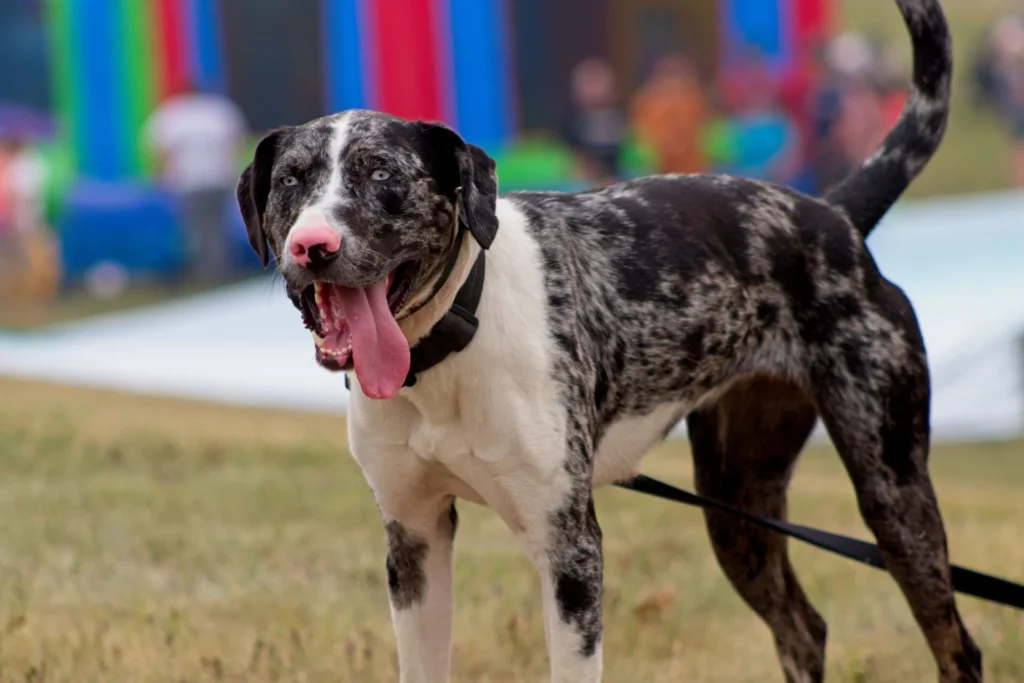
We have a four-year-old (neutered) Catahoula who is incredibly smart and energetic but only likes to play when there are no other dogs or cats around. There’s one older Labrador in the neighborhood he’ll greet nicely for a few minutes, but that’s about it. How can I help him learn to be more social with other dogs? I’ve been hesitant to take him to a dog park since the dogs there are off-leash, and I worry he might not handle that well.
– Karen, Raleigh, North Carolina
Dear Susan,
You’re right to be cautious about your Catahoula’s interactions with other dogs, especially in off-leash environments like dog parks. These dogs are extremely smart, high-energy, and deeply bonded to their people, which can make them both wonderful companions and a bit intense around unfamiliar animals. The good news is that socialization isn’t just for puppies; older dogs can continue learning new social skills. It just takes patience, consistency, and a plan. Let’s start with this: your Catahoula doesn’t have to love every dog to be well-socialized. The goal is simply for him to stay calm and polite around other dogs.
Because he already gets along with one dog — the Labrador — we know he’s capable of dog-friendly behavior—it’s just situational.
Step 1: Set him up for success
Before working on socialization, talk to your veterinarian about whether a short-term, mild anti-anxiety medication or calming supplement might help reduce his reactivity. Just as people take the edge off before facing something stressful, some dogs benefit from the same temporary support when learning new behaviors. This isn’t a cure; it’s simply a way to help him focus on learning rather than reacting.
Next, enroll in a positive-reinforcement training class — not because he needs to learn “sit” and “stay,” but because it gives you both a safe, structured environment around other dogs. The trainer can assess his body language and guide you on timing, distance, and reward use. Even a few sessions can dramatically improve your confidence and communication with him.
Step 2: Practice calm encounters
Outside of class, practice brief, controlled encounters with other dogs on leash. When you see another dog approaching, step calmly to the side of the sidewalk. Ask your dog to sit and face you — not the other dog. You want him to see you as his point of reference, not the potential “threat.”
If the other owner can cooperate, both of you should position yourselves so that your dogs are at your sides, with the humans in the middle. This prevents direct, head-on approaches, which in dog language can feel confrontational. Let them glance at each other from behind your legs while you talk casually with the other owner. Keep your leash loose and your tone light. A tight leash or tense voice signals that there’s something to worry about.
Reward your dog every time he stays calm, like when he looks at you, sniffs the air, or simply doesn’t lunge or bark. If he becomes reactive, don’t correct him harshly. Instead, increase the distance until he can focus on you again. This helps him associate seeing other dogs with staying relaxed and getting rewarded.
Step 3: Go at his pace
You might start 20 feet away from another dog today and only manage 15 feet next week. That’s okay. Socialization isn’t a sprint; it’s a gradual desensitization process. With enough repetition and treats, you’ll find his comfort zone slowly shrinking.
You can also build “neutral” exposure by walking near fenced dog parks (but not inside), sitting on a bench near a pet-friendly trail, or visiting dog-friendly stores like Home Depot where dogs are leashed and spread out. He’ll start learning that other dogs aren’t a threat just by being near them in calm, predictable settings.
Step 4: Manage expectations
It’s important to remember that not all dogs want — or need — to play with others. Many prefer human company or one or two trusted canine companions. If, after consistent work, your dog can calmly walk past others without growling or lunging, that’s a major success. That level of socialization keeps him safe, keeps other dogs safe, and keeps you both stress-free.
Step 5: Celebrate the progress
Over time, your Catahoula may expand his circle of dog friends — or he may just enjoy peaceful coexistence with dogs at a distance. Either outcome is perfectly fine. Some dogs are like social butterflies; others are more like polite introverts who prefer to stick with their small circle.
If you ever reach the point where he can share space with another calm, leashed dog and relax, that’s a huge victory. You’ve helped him feel safe in situations that once felt threatening, and that’s what true socialization is all about.
Bottom line: Don’t feel discouraged if your Catahoula never becomes a dog park regular. Many dogs find those environments overstimulating. What matters most is that he learns to stay calm, trust your lead, and enjoy his world without fear. You’re already halfway there just by being thoughtful, cautious, and committed to helping him grow.