

One night, I woke up thinking about Highlights for Children magazine.
Specifically, I was thinking about Goofus and Gallant — the longtime compare-and-contrast feature that showed children two very different ways of behaving. One illustration always made it easy to see which child was kind, respectful, thoughtful, or considerate, and which child still had lessons to learn.
Somewhere in the middle of the night, that idea connected with something I had been struggling with for quite some time: How do you help very young children recognize when an animal feels safe, loved, happy, neglected, frightened, or lonely?
How do you explain humane care to children who are still learning to understand emotions, relationships, and responsibility?
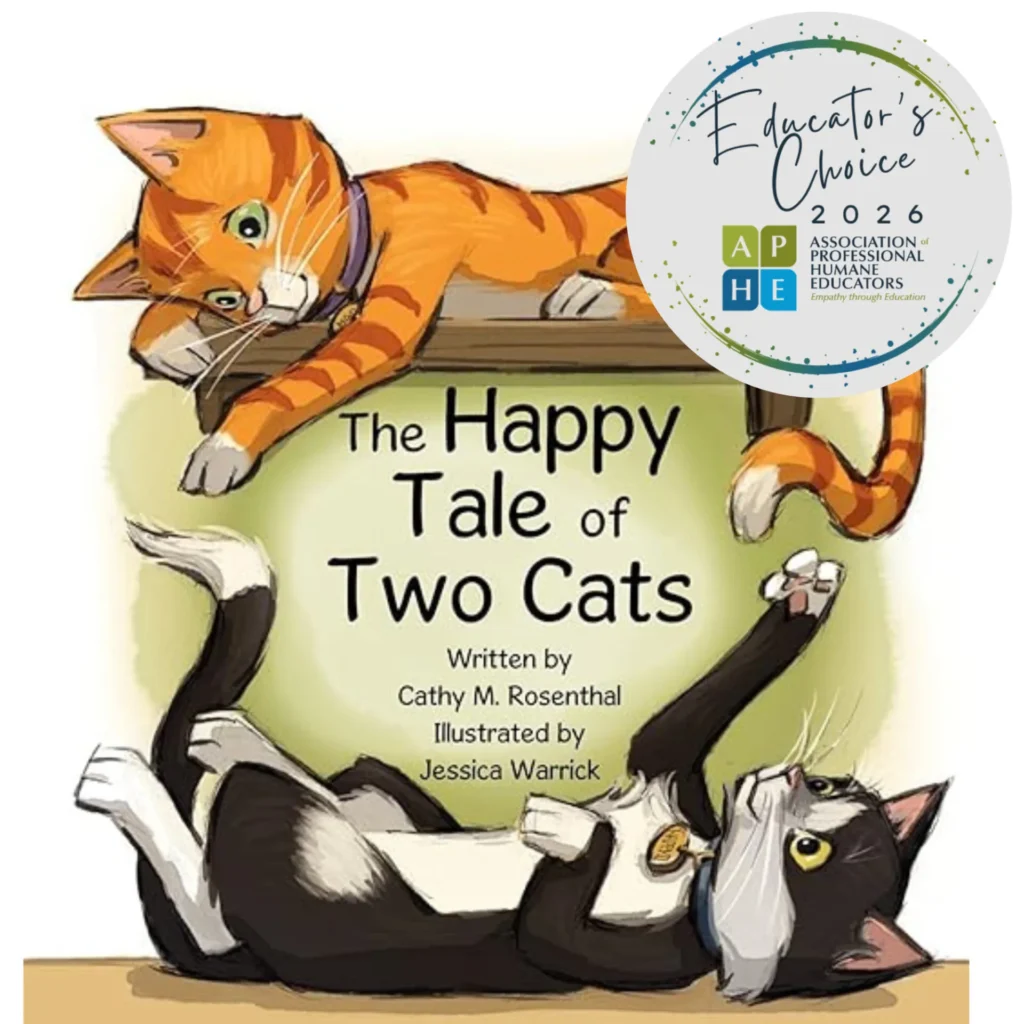
That moment quickly became the foundation for The Happy Tale of Two Cats.
Recently, I was honored to learn that the book received the 2026 Educator’s Choice Award for Best Humane Education Book for Young Children from the Association of Professional Humane Educators. I’m deeply grateful for the recognition among my peers, and even more grateful for the opportunity the book has created to encourage conversations about kindness, empathy, and compassion toward animals.
For more than 35 years, I’ve worked in animal welfare and humane education, and throughout those years I’ve often thought about how difficult it can be to explain animal welfare issues to very young children in ways that feel safe, understandable, and age-appropriate.
Children naturally recognize happiness, sadness, comfort, loneliness, and fear in other people. But animals can be harder for them to interpret. They may not yet understand why one pet seems relaxed and playful while another appears frightened, lonely, or unhealthy. I wanted to create a gentle way to help children begin to recognize those differences through storytelling and illustration, rather than through lectures or frightening images.
The compare-and-contrast structure became the perfect model.
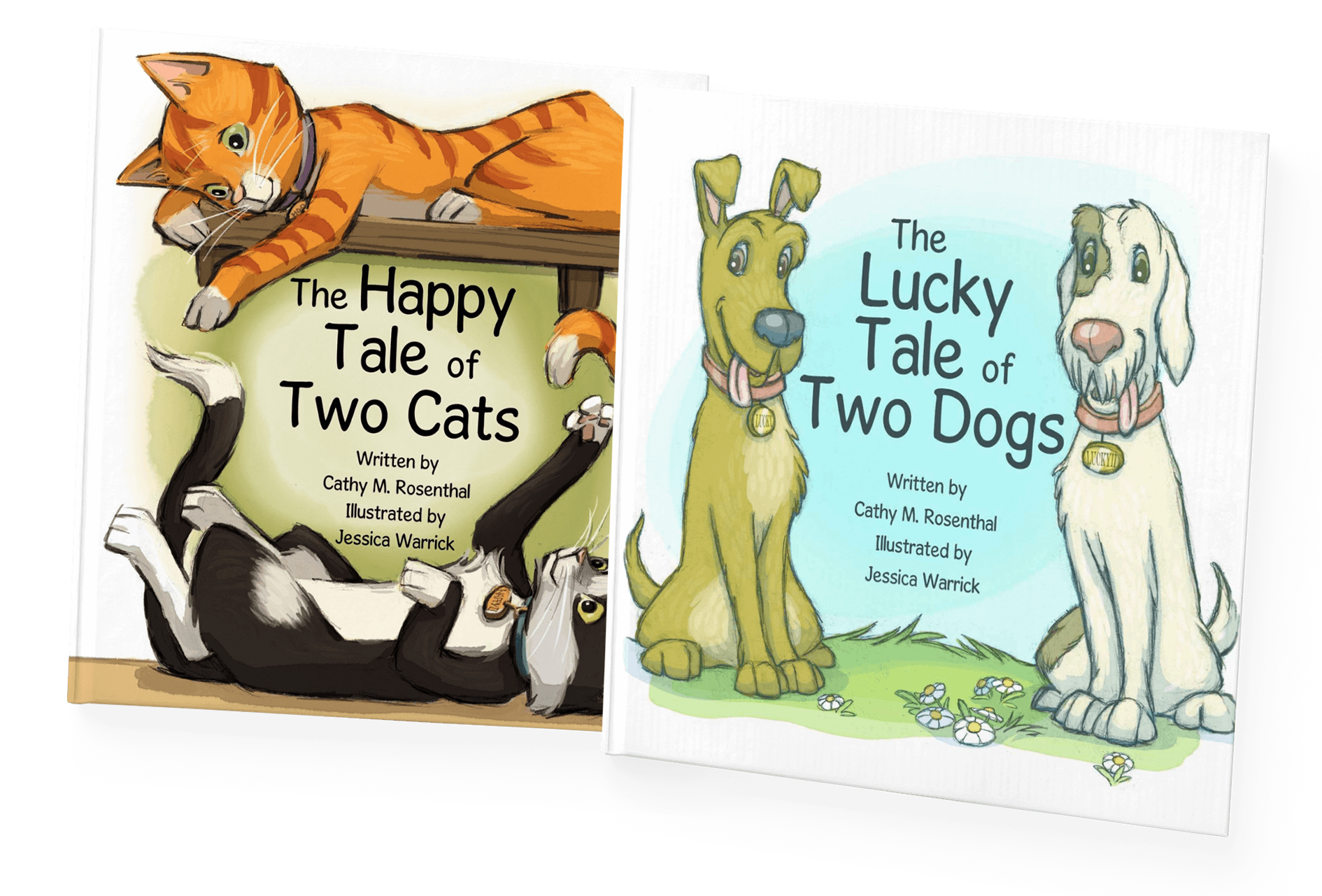
In The Happy Tale of Two Cats, one cat experiences love, safety, companionship, veterinary care, and stability. The other experiences uncertainty, loneliness, neglect, and life without consistent care before eventually finding hope and compassion from an animal shelter — where they get everything they need, including a new home. By placing the two stories side by side, children can begin to understand, visually and emotionally, how human choices affect animals’ lives.
Much like Goofus and Gallant helped children recognize manners and behavior through comparison, I hoped The Happy Tale of Two Cats could help children recognize kindness, empathy, and responsible pet care in ways that felt natural and memorable. I wanted them to be able to look at a cat (or dog with the Lucky Tale of Two Dogs) in their home or neighborhood and intuitively know if they were care for.
Humane education has always been important to me because its lessons extend far beyond animals. When children learn empathy toward animals, they also begin learning about compassion, responsibility, safety, community, and respect for vulnerable living beings around them. In many ways, humane education can help counter bullying, cruelty, and emotional disconnection by encouraging children to think beyond themselves and develop empathy for others. Over the years, I’ve seen firsthand how early humane education can open conversations that shape the way children think about both animals and people. Sometimes those conversations begin with something as simple as recognizing whether a pet looks scared, lonely, safe, or loved.
That was the heart behind this book from the very beginning.
I’m grateful to the humane educators, parents, teachers, shelters, and organizations who continue sharing The Happy Tale of Two Cats with children. Knowing the book is helping create conversations about kindness and compassion means more to me than I can express.
Sometimes the simplest ideas — even the ones that arrive in the middle of the night — can become meaningful tools for helping children better understand the world around them.
For those interested in sharing the book with children, classrooms, shelters, or humane education programs, it’s available here:
The Happy Tale of Two Cats
El Cuento Feliz de DOS Gatitas (Spanish Edition)